
Inside the Chapel of Santa Veneranda, part of the Chiesa dei Santi Geremia e Lucia, an assemblage of carpets unfolds, woven from the shared memory of many lands, suspended in the air by the persistent force of drone propellers, as if lifted against gravity. Like a murmur of instruments adjusting pitch, their synchronised hymn disrupts the chapel's sacred stillness—a ceremony in dissonance. The mirage soon falters, as the sound resolves into something all too familiar: the distant acoustics of surveillance, of terror, of war.
This is the sound of our times: an existence at war with life, fractured by greed and strained across both human and more-than-human worlds. Astray from any moral compass, our senses and sensibilities have worn thin, and with them, our capacity to dream and imagine alternative modes of living. Just as the postponement of violence once gave rise to the tales of the Arabian Nights—a constellation of stories told by Scheherazade to her mistrustful husband, unfolding as an ever-deferred horizon—Pavel Brăila's exhibition returns to these folktales, not to retell them, but to keep them open, to resist their ending, and to ask what might follow in our present condition: a sequel still in the making, inviting collective engagement. On this Thousand and Second Night, storytelling re-emerges as a vital act, generating narratives that remain unfinished, that invite participation, and that insist on the possibility of another outcome.
The ancient motif of the flying carpet (bisāt al-rīḥ), originating in Persia, has for centuries fuelled the imagination of storytellers as a vehicle of passage, rescue, and power. From the legend of King Solomon to the Sultan of the Indies, the magic carpet moves across eras and cultures, opening expansive imaginative realms. Pavel Brăila draws on this visual and narrative tradition to reorientate the material and symbolic meaning of the "flying carpet," transforming it into a speculative vehicle, one that gestures towards escape from the ongoing violence that continues to consume life. With the work Magic Carpet (2018), what first appeared as a poetic gesture—reimagining these devices as instruments of rescue and liberation for those whose journeys are halted at borders or end beneath the waves—reveals itself, in retrospect, as a premonition. The drones quietly anticipated the now-normalised militarisation of airspace across contemporary conflict zones, from Europe's eastern margins, felt in the everyday life of Moldova, to the ongoing wars in the Middle East.
Even in the absence of magical belief, carpets endure as woven narratives that map indigenous spiritualities, communal memory, and ecological relationships, reflecting inherently borderless cosmovisions. The weavers emerge as storytellers, transmitting embodied forms of vernacular knowledge and engineering—thread by thread, through precision, patience, and repetition. Each rug suspended in the chapel opens onto a multiplicity of worlds, collectively choreographing a space that resists fixed borders. Within this field, the cosmovisions embedded in their materiality are reclaimed: from carpets as protective amulets warding off evil to their symbolic role as carriers of abundance, fertility, gratitude to the earth and the continuity of life.
From the position of representing the Moldova Pavilion, the exhibition speaks of the necessity to act from a place of empathy and solidarity, acknowledging entangled histories and shared struggles. Pavel Brăila's proposal to reorientate our vision towards flight and fantasia is neither refuge nor escape from the wars unfolding on a global scale, but a way of revealing the power of imagining other possible exits and of insisting that alternatives still exist. In a world saturated with noise and dissonance, On the Thousand and Second Night emerges as a quiet yet persistent gesture, which whispers a peace yet to come.
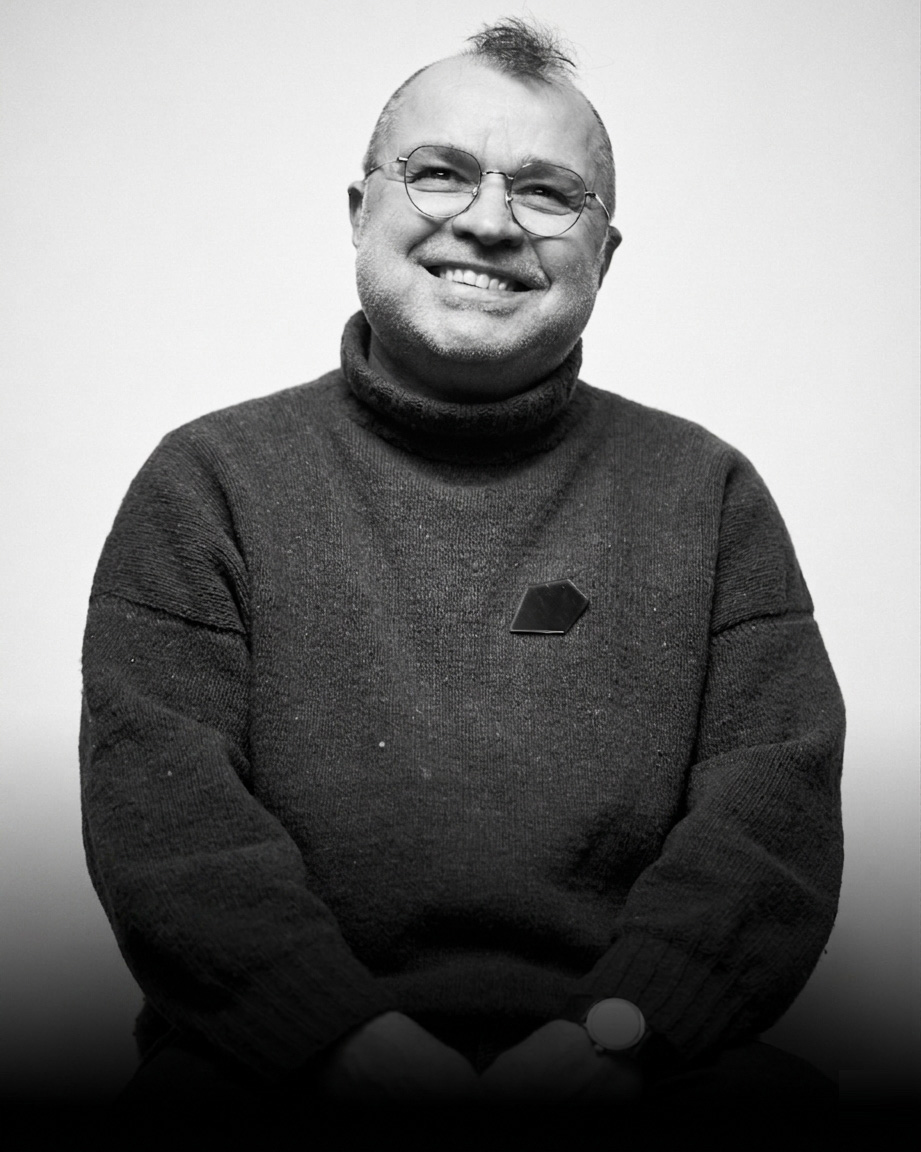
Pavel (b. 1971, Chișinău) lives and works between Chișinău and Berlin. He is one of the most internationally recognised artists from the Republic of Moldova. Working across film, photography, installation, and performance, his practice explores the social and political realities of Eastern Europe through attentive observation and subtle irony. He has participated twice in documenta (2002, 2017) and in Manifesta 10 (2014). His work has been presented at institutions including Tate (London), Neue Nationalgalerie (Berlin), Moderna Museet (Stockholm), Museum Boijmans Van Beuningen (Rotterdam), Kiasma (Helsinki), and the Renaissance Society (Chicago).
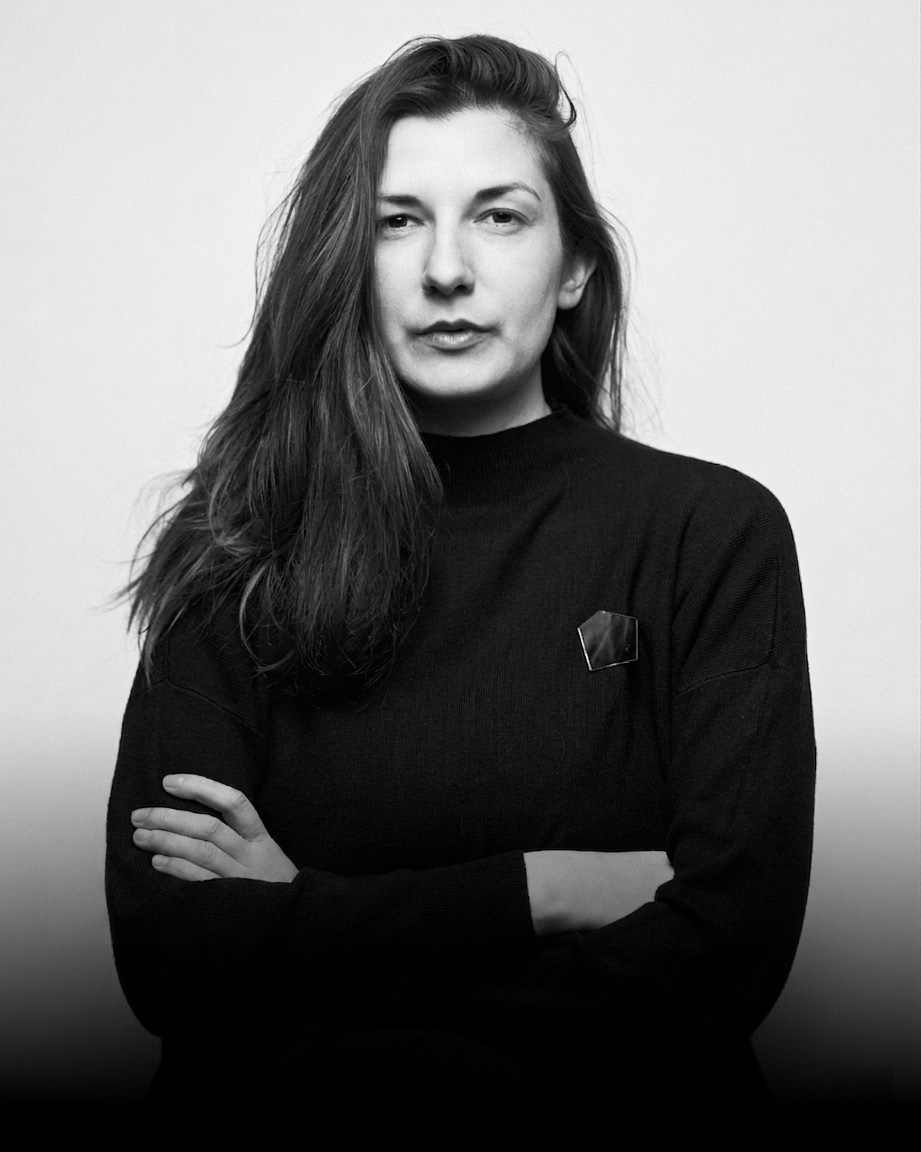
Adelina is a curator based in Bucharest. Between 2014 and 2021, she was active in Yogyakarta, and since 2022, she has been living in Bucharest, where she has curated, among others, the group exhibition Ecologies of Repair at Gaep (2022), the residency project Flowing Streams (2024), initiated by EUNIC Romania, and co-curated Jogja Biennale 17, Titen: Embodied Knowledges, Shifting Grounds (2023). She is part of the tranzit.ro/Bucharest team, active at the Experimental Station for Research on Art and Life, and in 2025 co-founded the Amaranth Seed Collective / ASK together with artists, curators, and architects, on shared land adjacent to the Research Station.
The Ministry of Culture and The Ministry of Foreign Affairs of the Republic of Moldova
ArtWatt
Galeria Lutnița
Gaep Gallery
Tesseract Architecture and Claudiu Ionescu
Gorgona Architecture & Design
Olga Roșca, Ionela Iurașco, Lucia Berdos, Corina Bucea, Mihai Pop, Livia Pancu, Andrei Cibotaru, Nora Dorogan, Carolina Novac, Otilia Fiastru, Vlad Nancă, Tevž Logar, Iulian Melnic, Lia Melnic, Nichita Melnic, Elena Chimirciuc, Alexei Gherțescu, Dorin Nebunu, Lyuda Srynnykova, Sorin Florea, Cristian Oșan, Oleg Jelezneac, Yana Klichiuk, Olya Smirnova, Ivan Erofeev, Masha Iserlis, Olya Sivel, Valentina Negară, Ina Pinzari, Giles Eldridge, Sorina & Alexandru Cebotari, Sandro Damian, Svetlana & Andrei Faina, Marina Volcovschi, Radu Malanetzkii, Alexandra Mihalaș, Lilia Dragneva, Robert Garnett, Elena Chimirchiuc, Lucia Macari, Lala Alieva, Kenan Huseynov, Ecaterina Popescu, Serghei Fofanov, Marin Plămădeală, Alexandru Brăila, Victor Cojocaru, Gabriela Cucu, Petru Brăila, Valentina Brăila, Gabriela Ciumac, Eduard Musteatza, Silvia Roman, Lilian Severin, Vlad Aramescu, Natalia Mardari, Radu Bălan, Tatiana Diminenco, and others we forgot to mention.
Foundation ALT Moldova
ERSTE Foundation
The Innovate Moldova Programme, funded by Sweden and the UK
EXIMBANK, Bank of Intesa Sanpaolo
BERD'S HOTEL
DONARIS VIENNA INSURANCE GROUP
Bauschke Braeuer Buhlmann
Purcari Wineries Group
National Museum of Fine Arts of Moldova
The National Museum of the Romanian Peasant
tranzit.ro
Kunstverein Hannover
National Museum of Ethnography and Natural History of Moldova
Mediacor
TVR Moldova
TV8.MD
Radio România Cultural
Agora
Diez
Centru Vechi